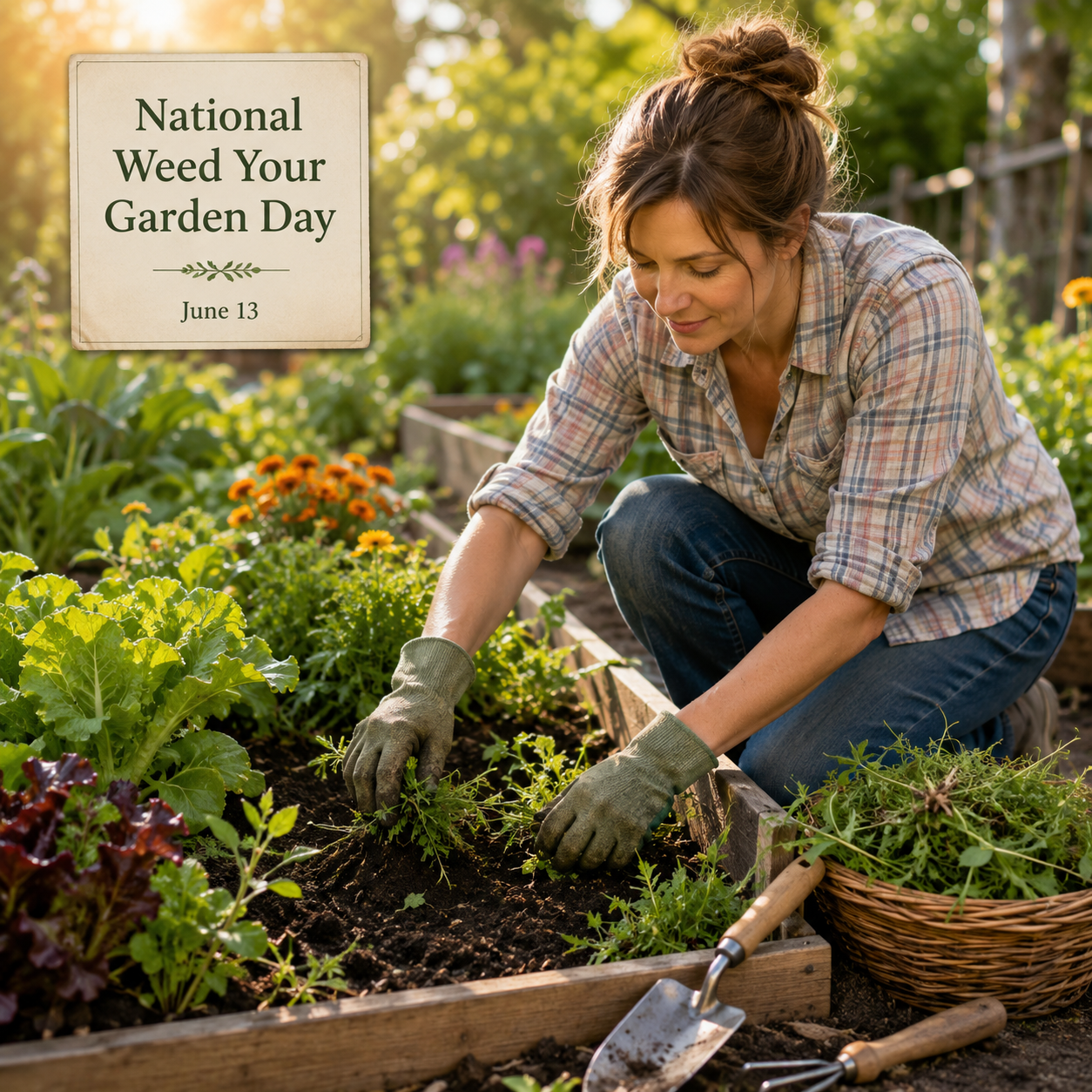
It is not the prettiest job, and it is usually not the one people love doing, but it is necessary. National Weed Your Garden Day, observed on June 13, is a good reminder to step outside, look closely at what is growing, and make room for the plants we actually meant to grow.
By mid-June, most gardens are already wide awake. Tomatoes are stretching taller, flowers are filling out, herbs are spreading, and weeds seem to appear overnight. One day the garden looks tidy. A few days later, little invaders are tucked between the beans, around the squash, under the marigolds, and along the edge of the raised beds.
Weeds are not just a nuisance. They compete with vegetables, herbs, and flowers for water, sunlight, and nutrients. Left alone, they can crowd out young plants and make a garden harder to manage. Some even become hiding places for insects and garden pests. A little time spent pulling weeds now can save a lot of trouble later in the season.
The best way to weed a garden is to do it after a rain or a good watering, the soil is softer and roots usually come out easier. Pull slowly, try to get the whole root, and shake off any loose soil before tossing the weeds into a bucket or compost pile. A hoe or hand tool can help with larger areas, but around young plants, your hands are often the safest tool.
National Weed Your Garden Day is also a good time to walk through the garden and take notice what is doing well. Look for leaves chewed by insects, vines needing support, dry spots in the soil, or plants ready for harvesting.
You don’t need to spend the whole day at it. Even fifteen or twenty minutes can make a difference. Clear one bed, one row, one flower border, or one corner. Gardening is often built out of small efforts done regularly, not one perfect day of work.
So on June 13, grab your gloves, a bucket, and maybe a cold drink for afterward. Pull the weeds before they take over, give your plants some space, and enjoy the simple work of helping your garden grow.
Quote for National Weed Your Garden Day
“A weed is but an unloved flower.”
— Ella Wheeler Wilcox